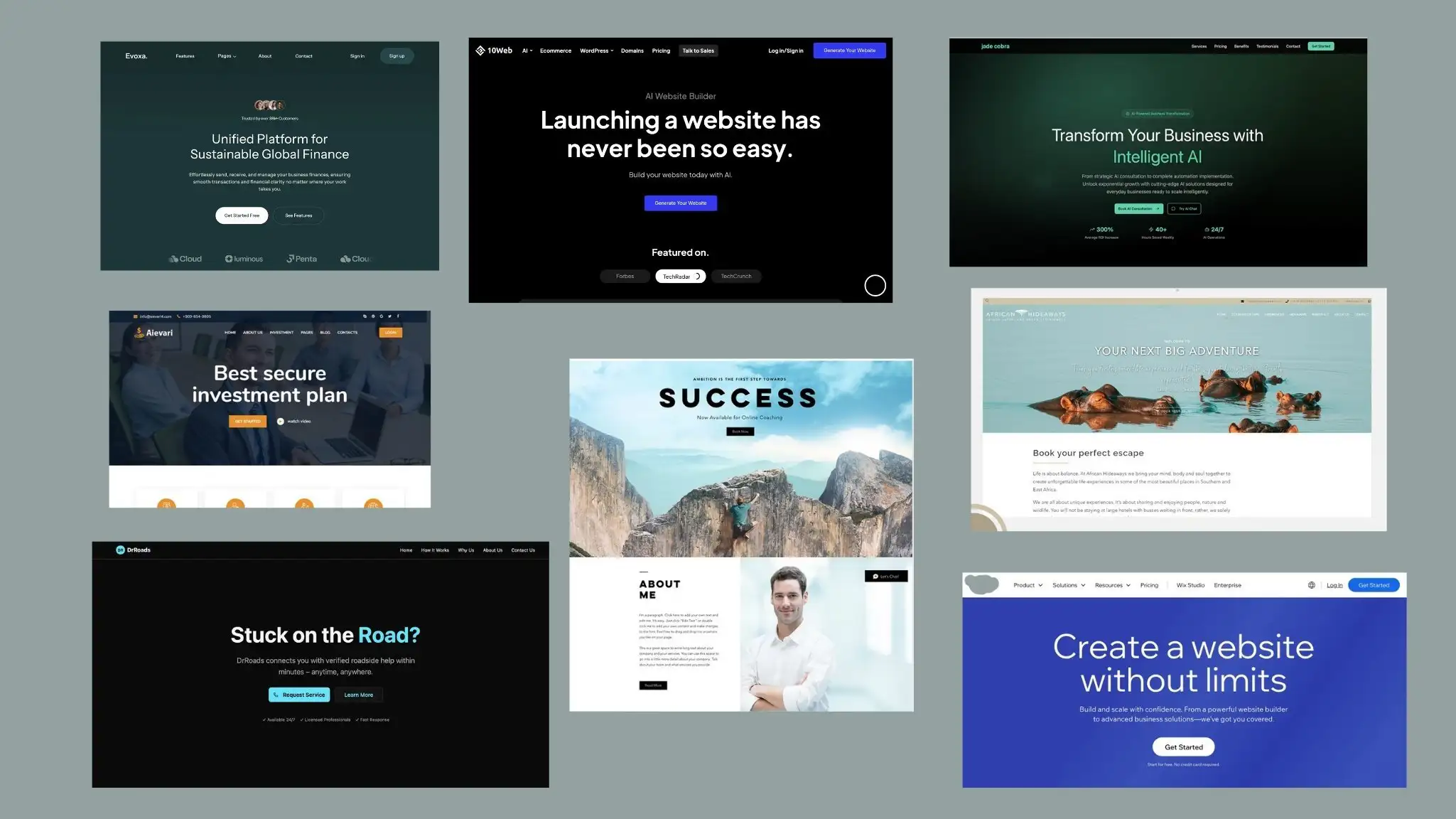
As I’ve been spending more time working in local SEO and web design, I’ve found myself reviewing a lot of small business websites across different industries, styles, and goals, but despite all the variation, the same underlying issue keeps showing up again and again.
A lot of people think their website is for themselves.
It sounds obvious when you say it out loud, but it’s incredibly common, because businesses naturally build websites that explain who they are, what they do, how long they’ve been around, and what they offer, almost like they’re presenting to a room full of colleagues rather than speaking to someone new.
Maybe the better question isn’t what your website should be, but who it’s actually for.
Your website is for the person landing on it for the first time, someone who doesn’t know you yet, doesn’t fully understand what you do, and is trying to quickly figure out whether you can help them. Every part of your site, from the words to the layout to the structure to the buttons, should be helping that person make sense of things and take the next step.
But your website isn’t a presentation, it’s a conversation.
And more than that, your website should make them feel something, which is something I’m still working on with my own site, and honestly I think it’s something that continues to evolve over time rather than being something you “finish,” because as you understand your audience better, your website should grow and shift with that understanding. Right now I am not completely happy with my site but as I develop and grow, I know it will be something I am proud of and know that I built it for that special person that see's it and needs my help.
If your website doesn’t make someone feel something, it’s easy to leave.
Because the truth is, you’re almost never the user of your own website. Your customers are, along with potential customers, people researching options, and even those quietly comparing you with someone else in another tab. If your website is built around what you want to say instead of what they need to hear, it might look fine on the surface, but it won’t perform in the way you expect.
If you’re unsure whether your current site is doing that, this is exactly the kind of thing I look at when working on your website
I think part of this comes from how most small business owners are used to talking about what they do. You explain it to friends, to customers, to people who ask, and over time that becomes your default way of describing your business. Then when it comes to your website, it turns into phrases like “we offer high-quality services tailored to your needs” or “we are dedicated to providing the best experience for our clients.” It sounds professional, but it doesn’t feel real, and it doesn’t really help the person reading it.
Clear beats clever. Every time.
What helps instead is clarity, simplicity, and relevance, and that is becoming even more important now because of a bigger shift happening in the background.
AI has raised the floor, and it has never been easier to build a “good enough” website that looks clean, works well, and ticks all the basic boxes. In many ways, that is a good thing because it has made websites more accessible than ever, but there is also a trade-off.
When everyone has access to the same tools, the same templates, and the same underlying models trained on the same data, things start to look very similar. You begin to notice the same layouts, the same tones of voice, and the same slightly polished but slightly generic feel appearing again and again.
Good enough is now common. And common doesn’t convert.
Even if your site looks good, if it is not built with structure, clarity, and intent, it can struggle to perform in search. That is where local SEO plays a bigger role than most people realise
So now we are in this interesting place where the baseline is higher, but differentiation is harder, and having a nice-looking website or even a functional one that does SEO “well enough” is no longer a competitive advantage, it is simply expected.
So the real question becomes, what is your edge?
Because if your design looks like everyone else’s and your messaging sounds like everyone else’s, then from a customer’s point of view there is no clear reason to choose you.
If you sound like everyone else, you will be treated like everyone else.
This is where understanding your audience properly becomes everything, because most websites still try to speak to everyone, which usually means they end up connecting with no one in particular. The alternative is to go much deeper and think about a specific person and build the site around them.
What they are struggling with, what they are trying to achieve, what they are confused about, what they have already tried, and what they actually care about, not just at a surface level, but properly.
What do they like, what do they dislike, what frustrates them about other businesses, and what makes them trust someone quickly?
The more specific you get, the more you stand out.
When you start thinking like that, your website naturally becomes less generic. The words feel more human, the structure makes more sense, and the overall experience starts to feel intentional rather than templated.
And this is where AI fits in, because AI is not the problem, it is a tool. Used well, it can help you move faster, generate ideas, and remove friction, but if you rely on it without bringing your own understanding into the process, it will default to what it knows, which is average patterns. That is where the sameness comes from.
AI will give you speed, but not depth. That part is still on you.
So it is less about avoiding AI and more about not outsourcing your thinking to it, because you still need to be the one who understands your customer and guides the direction, tone, and intent behind the site. Because at the end of the day, the websites that stand out are not just the ones that look good, they are the ones that feel like they were made for the person they are trying to reach.
People do not remember websites, they remember how they felt using them.
So before you build or rebuild your website, come back to that question, who is this actually for? And just as importantly, do you understand that person well enough to make them feel something when they land on your site?
If not, that is probably where the real work starts.
And if you ever want a second perspective on that, I am always happy to take a look, because sometimes it is not about tearing everything down and starting again. A shift in who you are speaking to, and how clearly you are speaking to them, can change everything.
Because a good website does not just exist.
It connects, or it gets ignored.

You may also like
Related articles you might find helpful.


As AI gets smarter, human connection becomes your biggest advantage

Perfectionism is procrastination wearing better clothes
Book your Digital Health Check
If this sounds like the kind of partnership you're looking for, I'd love to have a conversation
